
You publish quality content, fix your technical issues, and optimize every page carefully, yet your rankings still struggle to move. Competitors with similar or even weaker content continue to outrank you, and it feels like something outside your website is holding you back. If that sounds familiar, you’re likely missing a strong Off-Page SEO strategy.
Here’s the truth: search engines don’t rank pages based only on what’s inside your website. They also look at how the rest of the internet talks about you, links to you, and trusts you. That external validation is what Off-Page SEO is all about.
In this guide, you’ll learn what Off-Page SEO really means, why it matters for rankings, and how to build authority in a way that drives long-term organic growth.
What is SEO?
SEO, or Search Engine Optimization, is the process of improving a website so it ranks higher in search engines like Google. It includes optimizing content, structure, and technical elements to help search engines understand your website clearly.
SEO has three main parts: on-page SEO, technical SEO, and off-page SEO. On-page focuses on what you control within your website. Technical SEO ensures your site is fast, crawlable, and mobile-friendly. Off-page SEO focuses on building trust and authority outside your website.
What is Off-Page SEO?
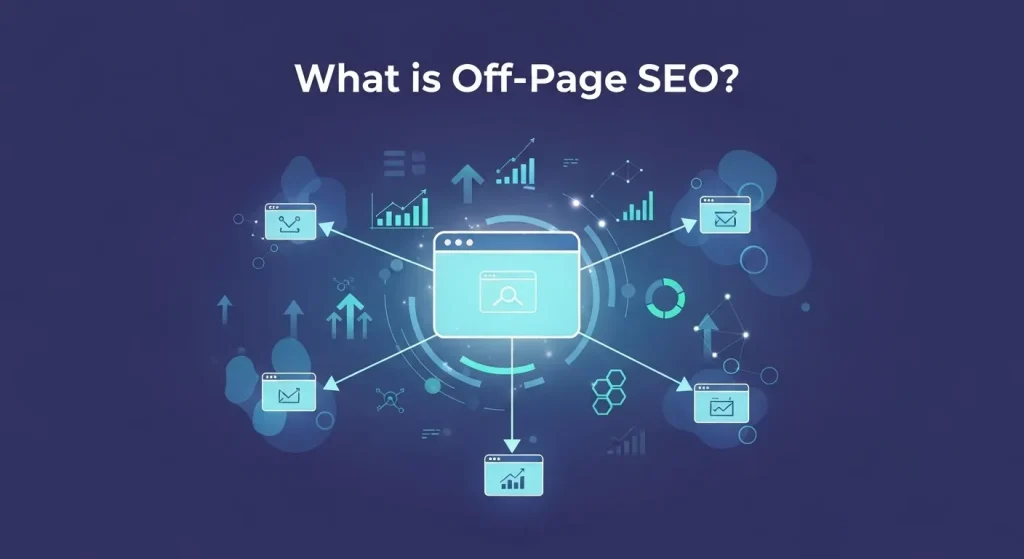
Off-Page SEO is the process of improving your website’s authority, credibility, and trust through actions taken outside your own website. It mainly involves earning backlinks, building brand mentions, and increasing your online reputation.
In simple terms, if On-Page SEO tells search engines what your page is about, Off-Page SEO tells them how trustworthy and valuable your page is compared to others. Understanding the types of SEO can help you see how Off-Page SEO works alongside On-Page SEO to improve rankings and site authority.
Search engines use off-page signals to decide:
- How popular your website is
- How trustworthy your brand appears
- How relevant your content is within your industry
- Whether other websites consider you a reliable source
The stronger your off-page signals, the higher your chances of ranking competitively.
Why is Off-Page SEO Important?
Off-Page SEO is important because it builds your website’s authority and trust, which directly impacts your ability to rank higher in search results. Search engines do not rank pages based only on content quality. They also look at how other websites interact with and reference your site. When trusted websites link to you or mention your brand, it signals that your content is valuable and reliable. These external signals help search engines decide whether your page deserves to rank above competitors.
Without strong Off-Page SEO, even well-optimized pages can struggle to compete in competitive niches. Backlinks and brand mentions act like votes of confidence. The more high-quality votes you earn, the stronger your website appears in search engines.
Off-Page SEO helps you:
- Build domain authority
- Improve keyword rankings
- Increase organic traffic
- Gain referral traffic from other websites
- Strengthen brand awareness
- Improve long-term ranking stability
It also protects your rankings over time. Websites with strong authority are less likely to lose positions when search algorithms update.
In simple terms, Off-Page SEO proves that your website is trusted beyond your own claims. And in SEO, trust is what separates pages that rank from pages that remain invisible.
Core Elements of Off-Page SEO
Off-Page SEO is not just about backlinks. It includes multiple signals that build authority and trust. Let’s break them down clearly.
1. Backlinks
Backlinks are links from other websites pointing to your site. They are one of the strongest ranking factors in SEO. When a reputable website links to you, it signals that your content is valuable. However, quality matters more than quantity. One link from a trusted site is often stronger than dozens from low-quality sites.
Good backlinks usually:
- Come from relevant websites
- Appear naturally within content
- Use descriptive anchor text
- Come from high-authority domains
Spammy or paid links can harm your rankings instead of helping.
2. Brand Mentions
Brand mentions happen when other websites talk about your business, even without linking to you. Search engines can recognize these mentions as signals of credibility. If people are discussing your brand across blogs, forums, and social platforms, it builds trust. Over time, consistent mentions strengthen your online presence.
3. Social Signals
Social signals refer to engagement on platforms like Facebook, LinkedIn, Twitter, and Instagram. While social shares are not direct ranking factors, they increase visibility.
More visibility often leads to:
- More people are discovering your content
- Higher chances of earning backlinks
- Increased brand awareness
Social media supports Off-Page SEO by expanding your reach.
4. Guest Posting
Guest posting involves writing content for other websites in your industry. It helps you reach new audiences and earn relevant backlinks.
A strong guest post should:
- Provide real value
- Be published on a reputable site
- Include a natural link back to your website
Done properly, guest posting builds both authority and traffic.
5. Influencer Outreach
Influencer outreach means connecting with industry experts who can share or mention your content. When trusted voices promote your work, your credibility increases. This strategy works best when you build genuine relationships instead of asking only for links.
6. Local SEO & Citations
For local businesses, off-page SEO includes directory listings and citations. This means listing your business on platforms like Google Business Profile, Yelp, and local directories. Consistent name, address, and phone number details build trust and improve local rankings.
How Backlinks Influence Rankings?
Backlinks influence rankings by acting as trust signals that tell search engines your content is valuable and worth ranking. Search engines use backlinks to measure authority and credibility. When another website links to your page, it signals that your content is useful enough to reference. The more high-quality and relevant backlinks you earn, the stronger your website appears compared to competitors targeting the same keywords.
However, not all backlinks carry the same weight. Search engines evaluate the quality, relevance, and authority of the linking site. A single link from a trusted, industry-related website can be more powerful than dozens of links from low-quality sources.
Backlinks influence rankings by:
- Passing authority from one site to another
- Increasing domain credibility
- Helping search engines discover new pages
- Strengthening keyword relevance through anchor text
- Building competitive advantage in tough niches
They also impact ranking stability. Websites with strong backlink profiles tend to maintain positions even during algorithm updates.
In simple terms, backlinks are one of the strongest ranking factors because they represent external validation. The more trustworthy websites that support your content, the more likely search engines are to rank you higher.
Types of Backlinks
Backlinks are not all the same. Some are stronger, some are safer, and some can even hurt your website if built the wrong way. If you understand the different types, you can build links more carefully. Let’s break them down in a simple way.
1. Natural Links
Natural links happen when someone links to your content without you asking. They link because your content helped them or added value to their page. These are the best type of backlinks. Search engines trust them more because they are earned, not requested. The more useful your content is, the more natural links you can attract over time.
2. Manual Outreach Links
Manual links come from effort. You reach out to website owners, bloggers, or businesses and suggest your content. This often happens through guest posts or collaborations. These links are fine when done honestly and on relevant websites. The key is to focus on quality and real value, not just getting a link.
3. Editorial Links
Editorial links are placed inside content by website editors. These links are usually added because your website supports their topic. They are strong because they appear naturally within useful content. Search engines see them as high-quality signals. Getting these links often requires strong content and industry recognition.
4. Nofollow vs Dofollow Links
Dofollow links pass authority from one site to another. They help improve rankings directly. No-follow links do not pass authority in the same way, but they can still bring traffic and visibility. A natural backlink profile usually has both types. Having only one type can look unnatural.
How to Build a Strong Off-Page SEO Strategy (Step-by-Step)
To build a strong Off-Page SEO strategy, focus on earning quality backlinks, increasing brand visibility, and building real relationships in your industry. Off-Page SEO is not about shortcuts or quick wins. It is about building trust over time so search engines see your website as reliable and authoritative.
1. Create Link-Worthy Content
Start by creating content that people actually want to reference. If your content is helpful, clear, and solves real problems, other websites are more likely to link to it. Focus on detailed guides, case studies, data, or practical tips. Avoid writing shallow content that says what everyone else is saying. The more unique and useful your content is, the easier link building becomes. Strong content makes outreach much more effective.
2. Conduct Competitor Backlink Analysis
Look at websites that rank above you. Check where their backlinks are coming from and study the type of content earning those links. This helps you understand what works in your niche. You are not copying them, but learning from their strategy. Once you find link opportunities, create something better or more detailed. This gives other websites a reason to link to you instead.
3. Do Smart Outreach
Reach out to website owners, bloggers, and industry sites in a personal way. Avoid sending generic messages to hundreds of websites. Explain why your content is helpful and how it adds value to their audience. Keep your message short and clear. Focus on relevance instead of volume. Good outreach builds long-term connections, not just backlinks.
4. Use Guest Blogging Properly
Guest blogging works when done with the right mindset. Write high-quality articles for trusted websites in your niche. Do not publish on random sites just to get links. Make sure your content truly helps their readers. Include your link naturally within the content. A few strong guest posts are better than many weak ones.
5. Leverage Digital PR
Digital PR means getting mentioned on news sites, blogs, or online publications. This can happen through expert quotes, research, or unique insights. Journalists and bloggers look for useful information they can reference. If you provide value, they may link back to your website. These links are usually strong and trusted. Digital PR also builds brand awareness beyond SEO.
6. Build Real Relationships
Strong Off-Page SEO is built on relationships. Connect with others in your industry through social media, communities, and events. Support their work before asking for anything in return. Over time, collaborations and mentions happen naturally. People are more likely to link to someone they know and trust. Authority grows faster when relationships are genuine.
Common Off-Page SEO Mistakes to Avoid
Many websites try to build backlinks but end up hurting their rankings instead. Small mistakes in Off-Page SEO can create long-term problems. Search engines are strict when it comes to unnatural link building. Let’s look at the common mistakes you should stay away from.
1. Buying Low-Quality Links
Buying cheap backlinks from random websites is risky. These links usually come from spammy sites with no real value. Search engines can detect this pattern easily. Instead of helping, these links can lower your rankings. It is always safer to earn links naturally or through honest outreach.
2. Focusing Only on Quantity
Some people think more links always mean better rankings. That is not true. A few strong links from trusted websites are much more powerful than hundreds of weak ones. Low-quality links add little value. Focus on relevance and authority instead of numbers.
3. Ignoring Anchor Text Diversity
Using the same keyword again and again in backlinks looks unnatural. Search engines may see it as manipulation. A natural link profile includes branded words, generic terms, and different phrases. Mixing anchor text keeps your backlink profile safe. It also makes links look more organic.
4. Building Links Too Fast
Sudden growth in backlinks can look suspicious. If your website gets hundreds of links overnight, it may raise red flags. Natural growth usually happens slowly over time. Focus on steady progress instead of quick results. Consistency is safer and more effective.
5. Ignoring Brand Building
Off-Page SEO is not just about links. If people do not recognize or trust your brand, links alone will not help much. Building authority means creating a strong online presence. Engage with your audience and industry regularly. A trusted brand attracts links naturally.
Final Words
Off-Page SEO is about building trust with search engines and users. It goes beyond your website and focuses on how the digital world views your brand. Backlinks, brand mentions, social visibility, and partnerships all contribute to your authority.
When done properly, Off-Page SEO strengthens your rankings, improves brand recognition, and drives long-term organic growth. It requires patience, consistency, and ethical practices, but the results are powerful. If On-Page SEO builds your house, Off-Page SEO builds your reputation. And in competitive search results, reputation is what wins.
Frequently Asked Questions (FAQs)
1. What is Off-Page SEO?
Off-Page SEO is the process of improving your website’s authority through actions taken outside your website. It mainly involves earning backlinks, brand mentions, and building trust online.
2. How is Off-Page SEO different from On-Page SEO?
Off-Page SEO focuses on external signals like backlinks and brand reputation. On-Page SEO focuses on optimizing content and elements within your website.
3. Why are backlinks important in Off-Page SEO?
Backlinks are important because they act as trust signals for search engines. High-quality backlinks increase authority and improve rankings.
4. How many backlinks do I need to rank higher?
The number of backlinks you need depends on your competition and niche. Quality and relevance matter more than the total number of links.
5. What makes a backlink high quality?
A high-quality backlink comes from a trusted and relevant website. It appears naturally within useful content and adds real value.
6. Does social media help in Off-Page SEO?
Social media helps by increasing visibility and driving traffic to your content. More visibility can lead to more natural backlinks.
7. How long does Off-Page SEO take to show results?
Off-Page SEO usually takes several weeks or months to show clear results. Authority builds slowly through consistent effort.
8. Can bad backlinks harm my website rankings?
Yes, bad backlinks from spammy websites can harm your rankings. Search engines may lower your authority if your link profile looks unnatural.